
Stablecoins Across Markets
Issue 01 • Sep 14, 2026

Different users, different markets, different paths to growth
By the end of August 2026, stablecoins had a combined market capitalization of about USD 311 billion, according to CoinDesk Research. The same report found that USDT remained the largest stablecoin at USD 183 billion, followed by USDC at USD 73.9 billion, while euro stablecoins collectively reached USD 776 million.
Those figures show the difference in scale, but not how each stablecoin reaches users or what demand it serves. Some already have distribution through a payment platform or partner network, while others are shaped by demand for a particular currency.
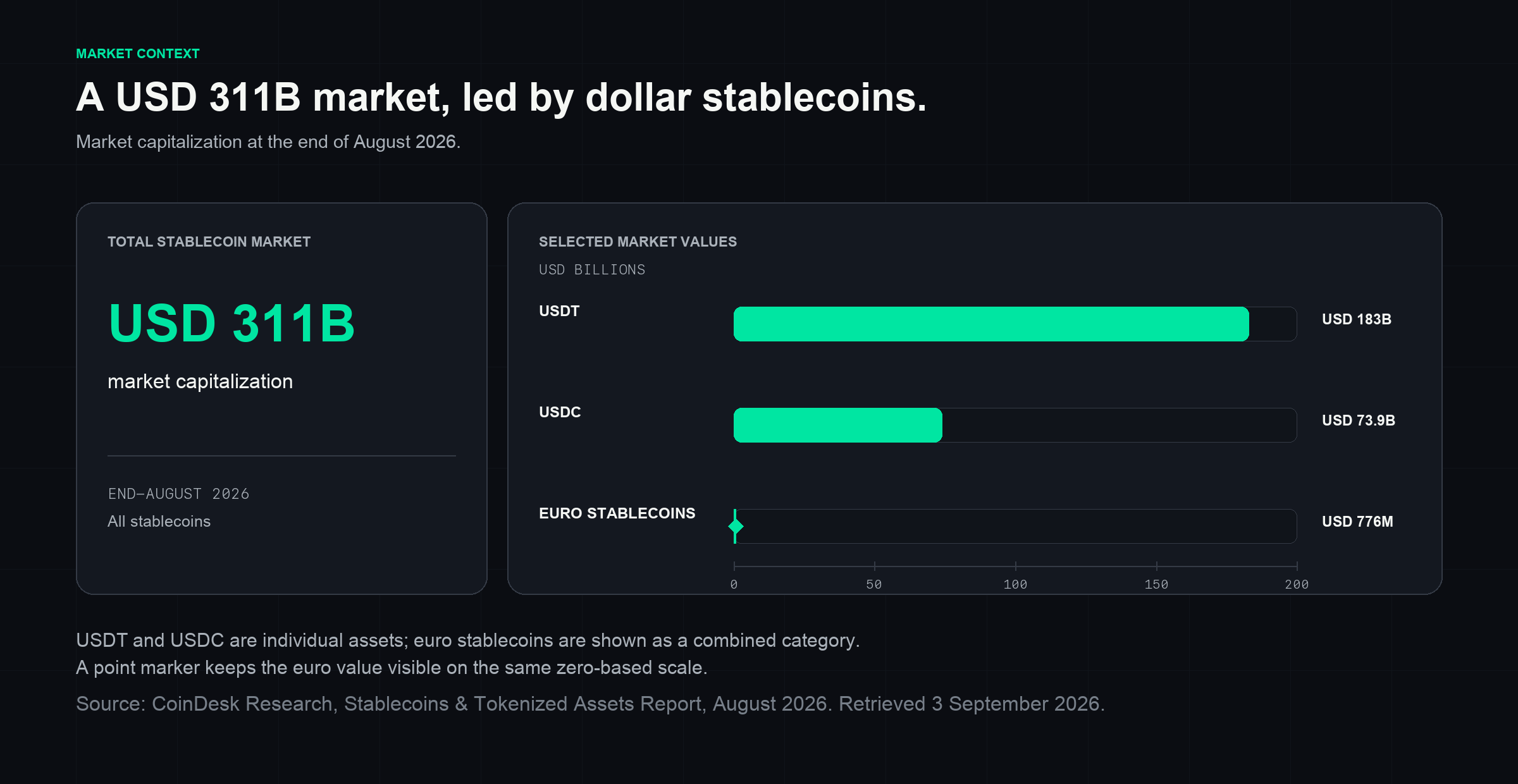
Source: CoinDesk Research, Stablecoins & Tokenized Assets Report, August 2026. Retrieved September 3, 2026.
Different starting points
Dollar liquidity
For USDT and USDC, that starting point is a large base of dollar demand. Tether tracks USDT across transfers, savings and spot markets, while Circle describes USDC as built for payments and 24/7 financial markets.
For both, the next question is what people can do with that liquidity, from making payments and converting currencies to accessing financial products.
Products and partner networks
Then there are stablecoins that begin with distribution already in place.
PYUSD is available through PayPal accounts in 70 markets, while Meli Dólar is available to Mercado Pago users in Brazil, Mexico and Chile.
RLUSD takes a more institution-led path through Ripple Payments, exchanges and financial partners, with USD 2.18 billion in circulation as of August 27, 2026.
For USDG, the network itself is part of the distribution: the Global Dollar Network is built around USDG and includes partners such as Kraken, Robinhood and Worldpay. In July 2026, the network reported more than 150 enterprise partners and over USD 3 billion in circulation.
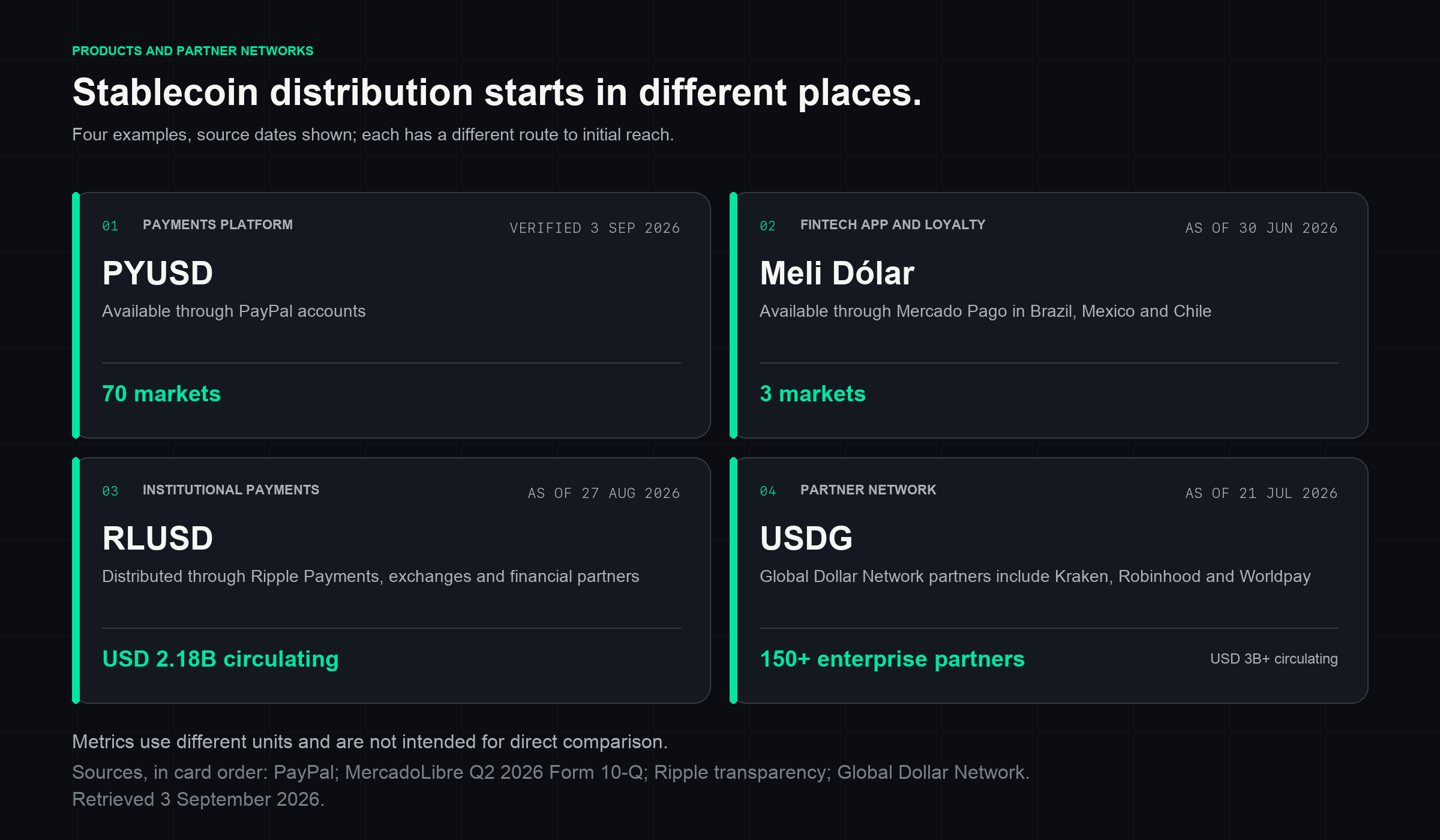
Sources: PayPal, Where is PYUSD available?; MercadoLibre, Q2 2026 Form 10-Q; Ripple, RLUSD Transparency; and Global Dollar Network, 150+ Partners. Retrieved September 3, 2026.
That built-in distribution can give a stablecoin its first market. From there, growth comes from making it available through other platforms, connecting it to assets people already hold and bringing it into markets the original distribution does not cover.
But wider reach is not the same as meaningful use. Once a stablecoin becomes available, people still need a reason to hold it, move it, pay with it or convert into or out of it.
Non-USD stablecoins
For non-USD stablecoins, that reason often begins with the currency itself. A euro, peso or yen stablecoin can support payments, savings, settlement or foreign exchange when people or businesses need to use that currency.
That need is beginning to show up in the data. Within the basket tracked by Dune and Visa, non-USD stablecoin supply roughly tripled from January 2023 to February 2026 after excluding EURT to remove the effect of its discontinuation.
Transfer volume captures onchain movements rather than payments alone, but together the figures show both the market’s growth and the euro’s early lead.
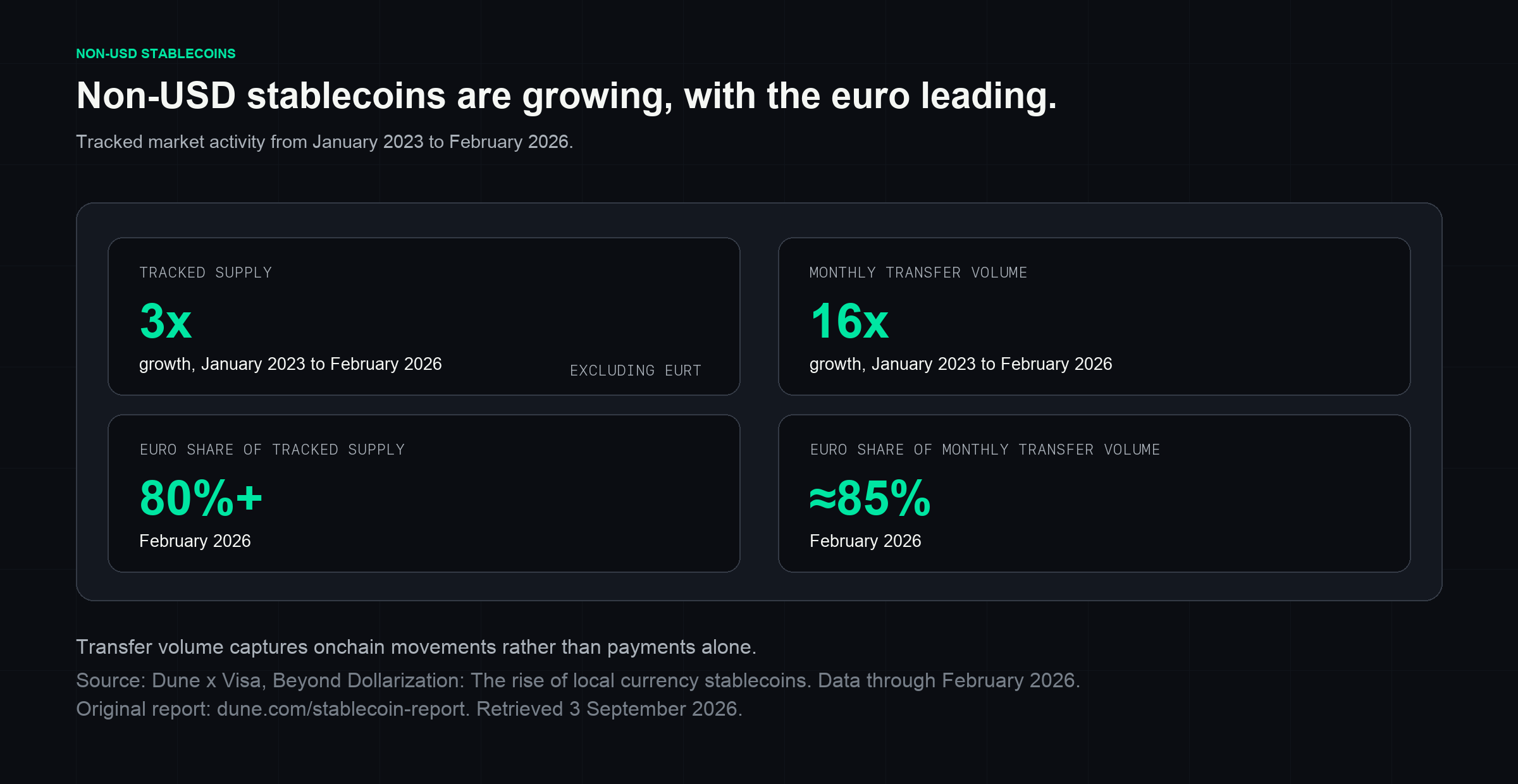
Source: Dune x Visa, Beyond Dollarization: The Rise of Local Currency Stablecoins. Data through February 2026. Retrieved September 3, 2026.
That growth is taking shape through different products.
For EURC, Circle starts with Circle Mint: customers can swap EURC to USDC, and Circle presents the asset for euro-denominated payments, foreign exchange and financial services.
Monerium takes a different route. Its euro IBAN links a wallet to SEPA, so incoming euros are issued as EURe in the connected wallet and outgoing EURe can be sent to a bank account as euros.
Mexico and Japan show how local-currency stablecoins can build around familiar payment systems. In Mexico, businesses using Juno can move between pesos sent through SPEI and MXNB. In Japan, people who complete identity verification can use JPYC EX to move between a bank account and a registered wallet.
These examples show why demand for a currency is not enough on its own. Growth depends on whether people can access the stablecoin, exchange it when they need to and use it for something that matters.
From access to use
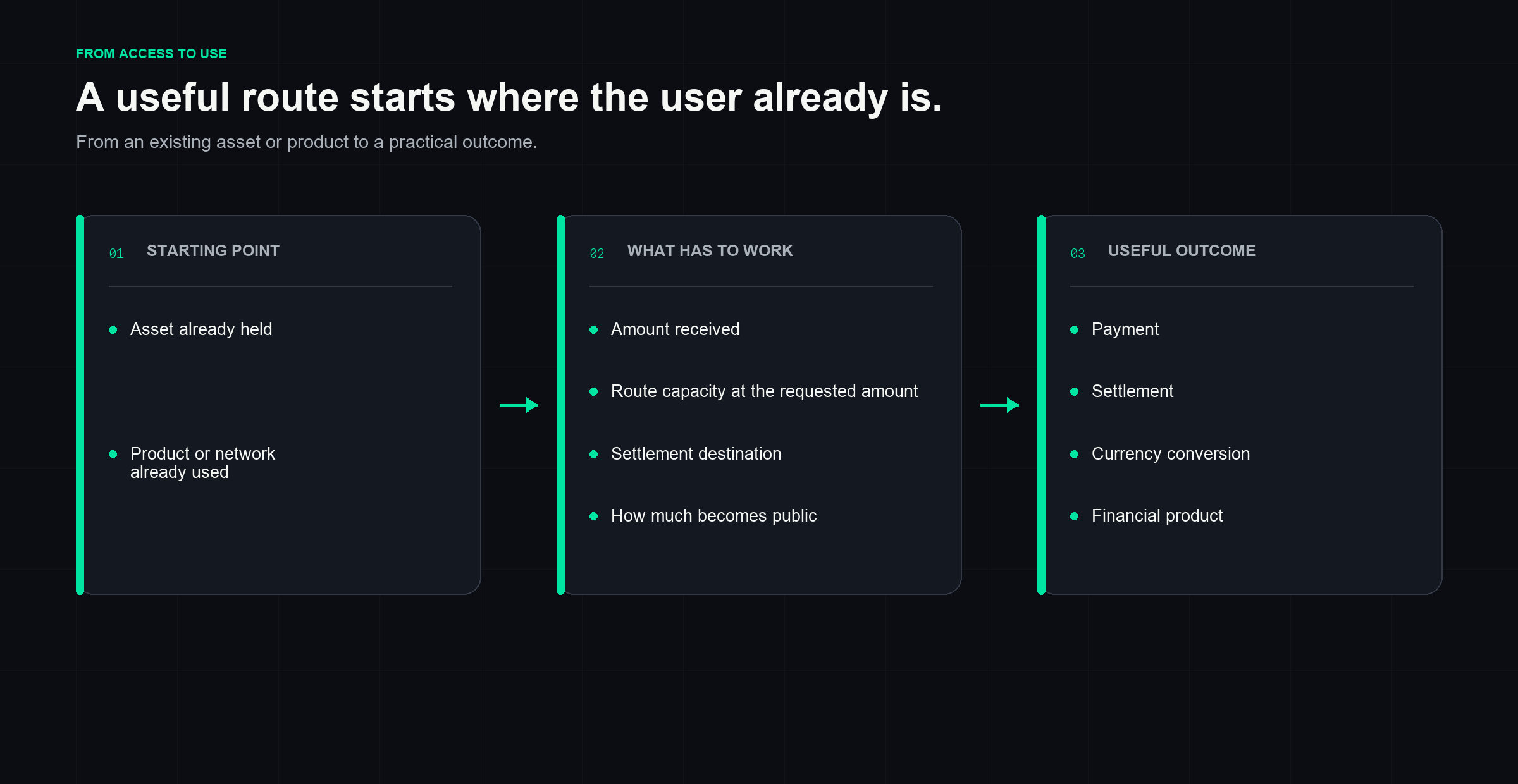
People rarely begin with the stablecoin itself. They start with an asset they already hold, a product or network they already use and something they need the stablecoin to do.
That purpose looks different for different users. Someone using a wallet may want to move straight from an asset they already hold into the stablecoin, without first sending funds through an exchange. A business may care more about how much arrives, whether the route can handle the transaction and whether the funds reach the right place for settlement. How much of the transaction becomes public may matter as well.
Meeting those needs is what turns access into actual use.
Infrastructure as distribution
Once those needs are clear, the next question is how a stablecoin reaches more people. For an issuer, infrastructure is part of distribution. It determines where the stablecoin is available, how people can reach it and which products can offer it. Connections across networks and products can extend that reach without requiring the issuer to build every route separately.
But reach is not simply a matter of network count. A connection adds value when it links the stablecoin to liquidity, an existing user base or a financial flow where it serves a clear purpose. Existing integrations can make it easier for products to support the asset, while each product still decides whether and how to make it available.
That reach is only part of the picture. A transaction can reveal more than a person or business might want to make public, and that can also shape which route makes sense.
Across these examples, the pattern is clear: stablecoins do not all start from the same place. Scale can make a stablecoin easier to exchange, an existing customer base can put it in people’s hands, and demand for a currency can give it a clear role.
Growth comes from taking that starting point further, into more products, markets and routes people can actually use.
NEAR Intents shows how those different paths can come together through the same infrastructure.
Stablecoins through NEAR Intents
As of September 3, 2026, NEAR Intents’ live supported-assets list includes USDT, USDC, EURe and more. Across NEAR Intents as a whole, the official website reported more than USD 27 billion in all-time volume across 34 chains, with liquidity across 125+ assets. For supported stablecoins, that means more ways in and out across different assets and networks.
That becomes practical when a person or business can start with an asset they already hold and receive a supported stablecoin on the network where it is needed. Quotes for the requested assets and amount come from independent third-party solvers, each of which determines how to source the necessary liquidity.
That infrastructure matters most when it reaches products people already use. On near.com, NEAR Intents powers cross-chain swaps through a single interface that is now confidential by default. SwapKit extends that access to wallets and applications through its SDK and API, including within Ledger Wallet’s Swap section. StableFlow and RHEA Finance also use it within broader routing flows of their own. These are a few examples among many across the NEAR Intents ecosystem, spanning wallets, integration tooling, stablecoin movement and financial products. For a supported stablecoin, that creates more potential points of access without relying on a single interface.
With wider access comes another consideration: how much of a stablecoin transaction becomes public. The amount, pair, direction and timing might be commercially sensitive. NEAR Confidential Intents is infrastructure designed to reduce the public visibility of certain transaction details. That puts public visibility alongside reach and liquidity when considering which route makes sense.
Even so, reduced public visibility does not mean anonymity or untraceability. Transaction information may remain visible to certain parties or be disclosed where required by law.
This is what those pieces add up to. A stablecoin with an established audience can reach more products. One built around a payment network or a particular currency can connect to more assets and networks. Where transaction details are sensitive, NEAR Confidential Intents brings reduced public visibility into the same infrastructure.
The path is different for each stablecoin, but the infrastructure does not have to be.
• • •
Sources
All web sources were retrieved September 3, 2026, unless another date is stated in the article.
Market scale and distribution
CoinDesk Research: Stablecoins & Tokenized Assets Report, August 2026
Global Dollar Network: 150+ partners and USD 3B+ in circulation
Non-USD stablecoins and local rails
NEAR Intents and connected products
• • •
Disclaimer: This article is published by Proximity Labs for informational purposes only. It is not investment, legal, tax or financial advice, and it is not an offer, solicitation or recommendation to buy, sell or hold any asset or to use any product or service. Proximity Labs is an independent contributor to the NEAR ecosystem. It did not develop and does not operate NEAR Intents or near.com. near.com is provided under its own terms at near.com/terms. Third parties, assets and products are named for identification and analysis only. Naming them does not indicate any partnership, affiliation, endorsement or sponsorship in either direction. Proximity Labs makes no representation regarding any stablecoin's backing, reserves, redemption, stability, yield or regulatory status, or regarding any third-party product's availability, performance or suitability. Products and services described may not be available in all jurisdictions. Information is drawn from the public sources listed and has not been independently verified. Statements attributed to issuers or operators describe what those parties report about themselves. Figures are stated as of the dates shown and change over time. Proximity Labs does not undertake to update this article.